
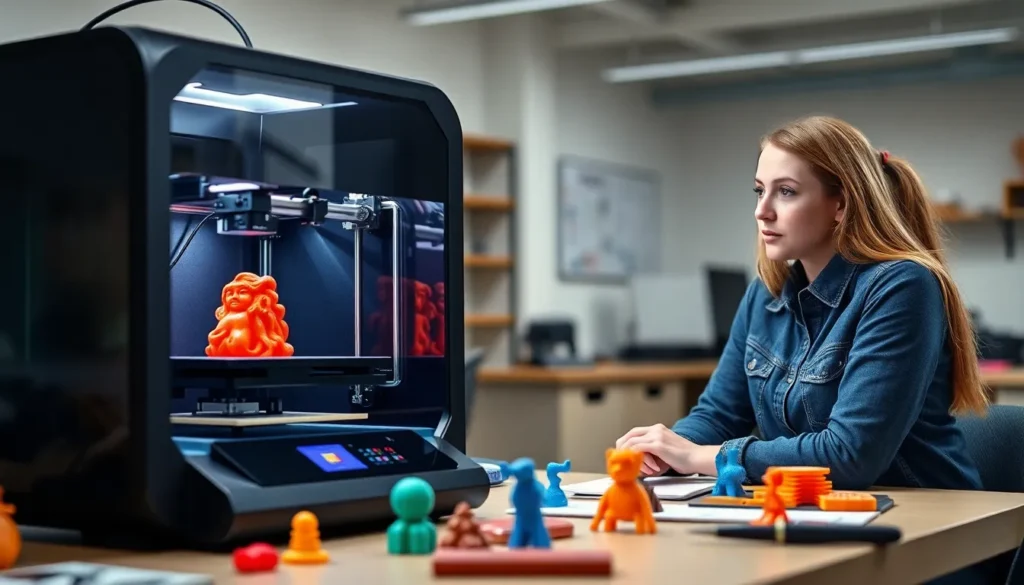
In the rapidly evolving world of technology, 3D printers have emerged as game-changers across various industries. From hobbyists crafting intricate models to professionals producing prototypes, these machines have revolutionized the way we create. With a plethora of options available, finding the top-rated 3D printers can feel overwhelming.
This guide dives into the best models on the market, highlighting their features, performance, and user satisfaction. Whether someone’s a seasoned expert or just starting out, understanding the top-rated choices can help streamline the decision-making process. Discover how these cutting-edge devices can unlock creativity and innovation like never before.
Overview Of Top Rated 3D Printers
Top-rated 3D printers offer exceptional performance and reliability across various applications. Features such as build volume, print quality, and material compatibility differentiate these models.
| Printer Model | Build Volume (mm) | Print Speed (mm/s) | Filament Types | User Rating |
|---|---|---|---|---|
| Prusa i3 MK3S+ | 250 x 210 x 210 | 200 | PLA, ABS, PETG | 9.8/10 |
| Creality Ender 3 V2 | 220 x 220 x 250 | 180 | PLA, TPU, PETG | 9.5/10 |
| Anycubic Mega S | 210 x 210 x 205 | 100 | PLA, ABS, HIPS | 9.3/10 |
| Ultimaker S3 | 230 x 230 x 200 | 24 | PLA, Nylon, TPU | 9.0/10 |
| Dremel DigiLab 3D20 | 228 x 150 x 140 | 100 | PLA | 8.5/10 |
Prusa i3 MK3S+ stands out with its large build volume and comprehensive support for different filament types. Creality Ender 3 V2 features affordability and a vibrant community, making it ideal for beginners. Anycubic Mega S provides excellent print quality with a user-friendly interface. Ultimaker S3 is suited for professionals needing high precision and exceptional material compatibility. Dremel DigiLab 3D20 offers simplicity, perfect for educational settings or beginners.
Investing in a top-rated 3D printer enhances creativity and productivity. Users regularly cite the importance of reliable specifications and reviews when choosing models tailored to specific needs.
Key Features To Consider
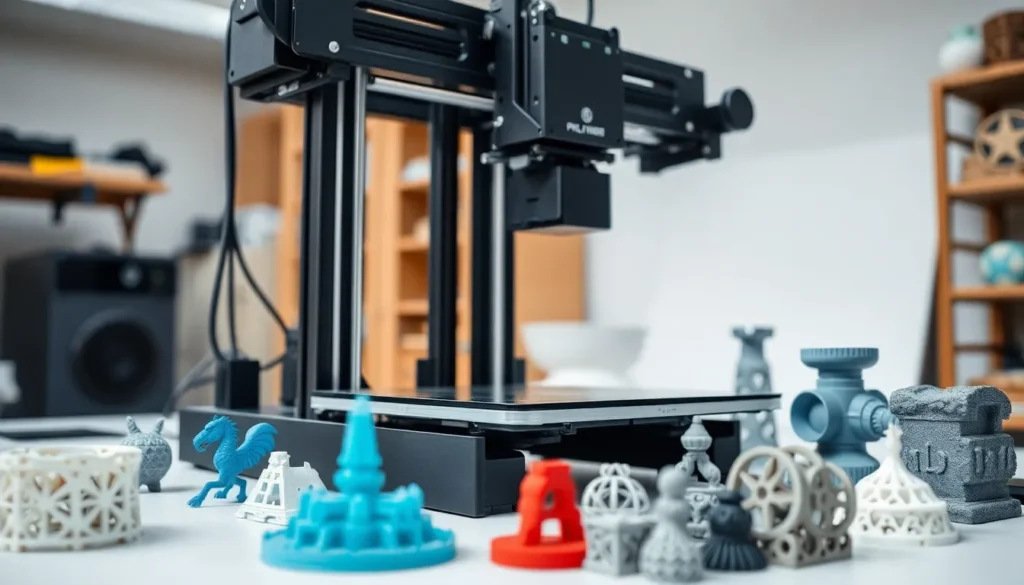
Understanding key features enhances the selection of a suitable 3D printer. Focus on aspects like build volume, print speed, and material compatibility for informed decisions.
Build Volume
Build volume indicates the maximum size of an object a printer can produce. Consider dimensions in both width and height, often expressed in millimeters (mm). Higher build volumes allow for larger projects. For example, the Prusa i3 MK3S+ offers a build volume of 250 x 210 x 210 mm, while the Creality Ender 3 V2 provides 220 x 220 x 250 mm. Assess specific needs to determine the optimal build volume for intended projects.
Print Speed
Print speed affects how quickly a printer can create an object. Measured in millimeters per second (mm/s), this rate influences project timeframes. Typical speeds range from 40 mm/s to over 120 mm/s, depending on printer quality and adjustments. The Anycubic Mega S operates around 60-100 mm/s, providing a balanced speed for quality results. Faster speeds may reduce detail, so prioritize a balance between speed and print quality for desired results.
Material Compatibility
Material compatibility plays a crucial role in printer functionality. Different printers support various filament types, including PLA, ABS, TPU, and PETG. The Prusa i3 MK3S+ and Ultimaker S3 excel with multiple material options, catering to diverse applications. Review manufacturer’s specifications to ensure the printer accommodates required materials, as this expands creative possibilities and enhances project versatility.
Comparison Of The Best Models
This section compares the top-rated 3D printers, focusing on their features and performance. Understanding these models helps readers make informed choices.
Model 1: Overview and Features
Prusa i3 MK3S+
The Prusa i3 MK3S+ stands out for its large build volume of 250 x 210 x 210 mm, accommodating diverse projects. It supports multiple filament types, including PLA, PETG, and ASA, providing versatility. Users appreciate its advanced features like power recovery and high precision, making it suitable for both hobbyists and professionals. The printer’s print speed varies from 40 mm/s to 200 mm/s, enhancing workflow efficiency.
Model 2: Overview and Features
Creality Ender 3 V2
The Creality Ender 3 V2 offers an affordable entry point for beginners, with a build volume of 220 x 220 x 250 mm. This model is known for its user-friendly assembly and robust community support. It accepts various filament types, including PLA and TPU, allowing for creative flexibility. Typical print speeds range from 50 mm/s to 70 mm/s, making it a reliable choice for personal and small projects.
Model 3: Overview and Features
Anycubic Mega S
The Anycubic Mega S excels in print quality, delivering remarkable details. Its build volume measures 210 x 210 x 205 mm, suitable for standard-sized prints. It supports PLA, ABS, and TPU filaments, offering a range of material options. The print speed typically reaches 60-100 mm/s, allowing quick production without sacrificing quality. Users favor its touchscreen interface for ease of use and calibrating prints effectively.
User Experience And Customer Feedback
User experiences and customer feedback play a vital role in evaluating 3D printers. Reviews generally highlight satisfaction with print quality, reliability, and ease of use. Many users report positive experiences with the Prusa i3 MK3S+, praising its print precision, robust support community, and user-friendly interface. Customer testimonials indicate that both hobbyists and professionals appreciate its versatility in handling various filament types.
Users of the Creality Ender 3 V2 frequently commend its affordability and assembly simplicity. Many beginners express satisfaction with the supportive online community, which provides abundant resources for troubleshooting. Feedback often mentions the printer’s capability to produce high-quality prints at a lower cost as a significant advantage.
The Anycubic Mega S receives favorable reviews for its exceptional print quality and touchscreen interface. Users often note the printer’s reliability in producing detailed prints, with minimal calibration required for successful operations. The appealing design and user-friendly setup enhance customer experiences.
Professional users report high levels of satisfaction with the Ultimaker S3, particularly praising its reliable performance and precision. Feedback highlights its advanced features, including a heated print bed and filament detection, which enhance usability in professional environments.
In educational settings, the Dremel DigiLab 3D20 stands out for its straightforward operation, receiving positive feedback from teachers and students alike. Users appreciate its focus on safety and ease of use, making it ideal for instructional purposes.
Overall, customer feedback indicates that the best-rated 3D printers excel in performance and enhance user satisfaction. Higher print quality and community support consistently influence purchasing decisions, establishing a solid reputation among users.
Selecting the right 3D printer can profoundly influence creativity and productivity. With numerous top-rated models available each offering unique features and capabilities, users can find the perfect fit for their needs. Whether it’s the versatility of the Prusa i3 MK3S+ or the affordability of the Creality Ender 3 V2, there’s a printer for everyone.
User feedback plays a vital role in this decision-making process. The satisfaction expressed by users highlights the importance of print quality and community support. As technology continues to evolve, investing in a reliable 3D printer ensures that both hobbyists and professionals can push the boundaries of innovation and design.


